When temperatures start dropping in Illinois, you may notice something different about your garage door. A door that seemed relatively quiet all summer may suddenly squeak, rattle, grind, pop, or groan every time it opens.
Some additional noise during colder weather can result from normal changes in metal components, lubricants, and other moving parts. However, a noisy garage door can also be an early warning that something needs attention.
At Doors By Russ, we believe strange garage door sounds are worth investigating before a small issue turns into an inconvenient breakdown. Understanding what causes those noises can help you decide whether you’re dealing with routine maintenance or a problem that deserves professional attention.
Why Cold Weather Can Make Garage Doors Noisier
A garage door is a large moving system made up of numerous components working together. Tracks, rollers, hinges, springs, bearings, cables, and the garage door operator all play a role every time the door moves.
Cold temperatures can affect how those components behave.
Metal components naturally contract slightly as temperatures fall. Lubricants may also become less effective, while existing wear that wasn’t especially noticeable during warmer weather can become more obvious.
The result may be a door that suddenly sounds very different.
That’s one reason seasonal garage door maintenance can be valuable. Paying attention to changes before winter is fully underway gives you an opportunity to address potential problems before you’re relying on the door during freezing mornings and snowy weather.
Common Garage Door Noises and What They May Mean
Not every garage door noise indicates the same problem. The type of sound and where it comes from can provide useful clues.
Squeaking or Squealing
A squeaking garage door may point to hinges, rollers, bearings, or other moving components that need attention. Dirt, normal wear, or inadequate lubrication can all contribute.
If the door continues to move smoothly and the sound is relatively minor, maintenance may be all that’s needed. Persistent or worsening squeaking, however, shouldn’t simply be ignored.
Our guide to garage door maintenance and expensive repairs explains why seemingly minor symptoms can be worth addressing early.
Rattling or Vibrating
Rattling can sometimes be associated with loose hardware or vibration within the garage door system. A garage door moves hundreds of pounds of material, so repeated operation can gradually affect hardware and components.
Avoid attempting adjustments to springs, cables, or other high-tension components yourself. These parts can be dangerous without the proper equipment and training.
If rattling is becoming more pronounced, professional garage door service can help identify its source.
Grinding, Popping, or Banging
Grinding, popping, and especially loud banging deserve more attention.
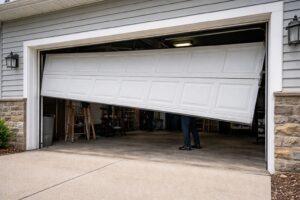
These sounds can potentially indicate worn rollers, track issues, spring problems, excessive resistance, or other mechanical concerns. If a loud noise is accompanied by uneven movement, jerking, sagging, or difficulty opening the door, stop repeatedly operating it until the system can be evaluated.
Homeowners can also review these signs a garage door needs repair to determine whether other warning signs are present.
Your Garage Door Opener Could Be Part of the Noise
Sometimes the door itself isn’t the only source of winter noise.
Your garage door opener—or operator—has its own motor, drive system, hardware, and moving components. An aging system may become noticeably louder, particularly when it’s working against a door that isn’t moving as freely as it should.
Pay attention to whether the sound seems to originate from the door or the operator mounted above it.
You should also watch for changes such as slower operation, inconsistent movement, unusual vibration, or a door that starts and stops unexpectedly.
Doors By Russ offers garage door operators for homeowners considering an updated system. Newer opener technology can also provide benefits beyond operation, including features related to convenience, security, and safety. You can learn more in our guide to upgrading a garage door opener.
What Homeowners Can Safely Check
You don’t need to disassemble your garage door to notice potential problems. In fact, springs, cables, brackets, and other components under tension should be left to trained professionals.
Instead, start with a visual and audible inspection.
Stand inside the garage and watch the door complete an opening and closing cycle from a safe distance. Look for unusual shaking, jerking, hesitation, or uneven movement. Listen carefully for where the noise begins.
Check whether anything obvious is obstructing the tracks or interfering with the door’s movement. Look for visible damage to panels and accessible hardware without touching high-tension components.
You can also review our garage door FAQs for answers to common questions about garage door operation and service.
If something doesn’t look or sound right, professional evaluation is safer than experimenting with components you aren’t familiar with.
When Garage Door Noise Means It’s Time for Repair
Noise becomes more concerning when it appears alongside changes in performance.
For example, schedule an inspection if your garage door is suddenly much louder and also moves unevenly, hesitates, struggles to open, reverses unexpectedly, or appears physically damaged.
You should also pay attention to a problem that steadily gets worse. Garage doors rarely become louder for no reason.
The goal is to address the cause rather than simply tolerate the sound.
Homeowners in the Naperville area can learn more about garage door repair in Naperville, while homeowners elsewhere can review our broader service area information.
Could an Older Garage Door Be the Problem?
Sometimes persistent noise is one symptom of an aging garage door system.
Garage doors don’t have a single universal expiration date. Their useful life depends on the door, components, installation, maintenance, frequency of operation, weather exposure, and repair history.
If your door requires increasingly frequent repairs, has significant physical deterioration, or no longer performs the way you need it to, comparing repair with replacement may make sense.
Our guide to garage door lifespan, repairs, and replacement can help you think through that decision.
If replacement becomes the better direction, Doors By Russ offers options ranging from steel garage doors to custom wood garage doors and contemporary modern garage doors.
Don’t Ignore a Garage Door That’s Getting Louder
A little extra noise doesn’t automatically mean your garage door is about to fail. But a significant change in sound is still information worth paying attention to.
Fall is an ideal time to notice how your garage door is operating before winter temperatures arrive in full force.
If your door is squeaking, grinding, rattling, popping, or simply doesn’t sound the way it used to, Doors By Russ can help determine what is causing the change. Contact Doors By Russ to discuss service before a minor annoyance becomes a larger winter inconvenience.
Key Takeaways
- Cold temperatures can make existing garage door wear and lubrication issues more noticeable.
- Squeaking, rattling, grinding, popping, and banging can point to different potential issues.
- A louder door accompanied by jerking, hesitation, uneven movement, or other performance changes deserves attention.
- Garage door springs, cables, and other high-tension components should not be adjusted without appropriate training.
- Your garage door opener may contribute to unusual noise as well.
- Seasonal maintenance can help identify developing problems before winter.
- Persistent noise from an older system may be one reason to compare repair with replacement.